How to Maintain a Sourdough Starter (Complete Beginner Guide)
How to Maintain Your Sourdough Starter


Plus how to revive dried or frozen starter
A sourdough starter is the living heart of naturally leavened bread. It’s a simple mixture of flour and water, but inside it is a thriving culture of wild yeast and beneficial bacteria that help dough rise, develop flavour, and create the texture sourdough is known for.
With regular feeding and a little observation, your starter can stay healthy for years.
What Is a Sourdough Starter?
A sourdough starter forms when flour and water ferment over time, allowing naturally occurring yeasts and bacteria to grow. These microorganisms consume sugars in the flour and produce gas, acidity, and flavour.
This process gives sourdough bread:
Natural rise
Tangy flavour
Better texture
Longer shelf life
Unique character from each culture
Your starter is alive, responsive, and always changing based on temperature, flour type, hydration, and feeding schedule.
How to Maintain a Healthy Starter
1. Feed Equal Parts Flour and Water
A simple maintenance feeding:
1/3 starter
1/3 water
1/3 flour
Mix until smooth.
This keeps your culture nourished and active.
2. Feed Based on What You Need
Before baking, calculate how much starter your recipe requires.
Example:
If your recipe needs 120g starter, and you want 90g left over to maintain:
You need 210g total starter
To refresh:
70g starter
70g water
70g flour
After feeding, you’ll have approximately 210g.
3. Use It at Peak Strength
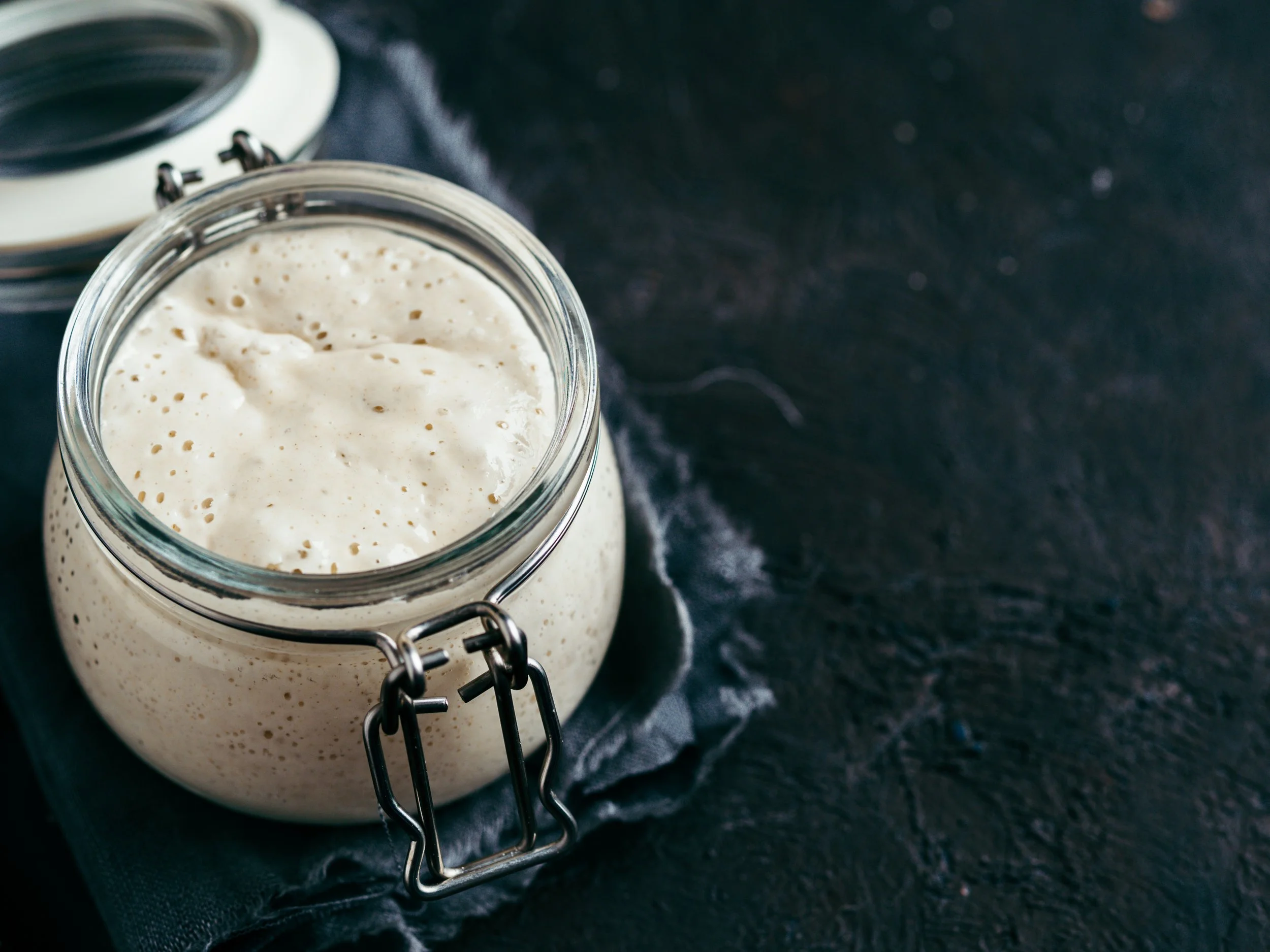
Your starter is strongest when:
doubled in size
bubbly throughout
airy and active
pleasantly tangy smelling
This is usually 4–12 hours after feeding, depending on room temperature.
That is the best time to bake with it.
4. Countertop vs Fridge Storage
If Baking Often
Keep starter at room temperature and feed daily.
If Baking Occasionally
Store in the fridge and feed weekly.
Cold temperatures slow fermentation, making maintenance easier.
5. Bringing a Refrigerated Starter Back
If starter has been in the fridge:
Remove it
Feed it fresh flour + water
Leave at room temperature
It may need 1–2 feedings to become fully active again.
6. Choose the Right Container
Use a container that can breathe lightly and expand.
Best options:
Glass jar
Loose lid
Cloth cover
Plastic lid set lightly on top
Never seal tightly if starter is highly active.
7. Use Good Flour
Strong results often come from quality flour.
Good options:
Unbleached white flour
Organic flour
Whole wheat (great for boosting activity)
Rye flour (excellent for sluggish starters)
How to Revive Dried Starter
Dried starter is one of the best backup methods.
Step 1
Place dried starter flakes into a bowl.
Add:
75g lukewarm water (about 98–105°F / 37–40°C)
Let soften.
Step 2
Stir occasionally until dissolved.
This can take up to 2 hours.
Step 3
Feed with:
75g flour
Mix and place somewhere warm.
Step 4
Wait 24 hours.
You may begin seeing bubbles.
Step 5
Feed again:
75g water
75g flour
Wait another 24 hours.
Step 6
Repeat once more if needed.
Once bubbly, rising, and falling predictably, it’s ready.
How to Revive Frozen Starter
Freezing is another useful backup method.
Step 1
Move frozen starter to fridge overnight to thaw slowly.
Step 2
The next day, feed:
75g starter
75g lukewarm water
75g flour
Keep somewhere warm.
Step 3
Wait 24 hours.
You should begin seeing activity.
Step 4
Feed again:
75g water
75g flour
Wait another 24 hours.
Step 5
Repeat until strong, bubbly, and doubling in size.
Signs of a Healthy Starter
Look for:
doubles after feeding
bubbly texture
mild tangy aroma
rises and falls predictably
floats sometimes (not required)
If Your Starter Seems Weak
Try:
warmer room temperature
feeding more frequently
switching to unbleached flour
adding some rye or whole wheat flour
discarding more before feeding
Final Thought
Sourdough is part science, part intuition.
Your starter rewards consistency more than perfection. Watch it, learn its rhythms, and adjust with the seasons.
With patience, you’ll have a culture that can bake beautiful bread for years.
Need a Starter of Your Own?
Stop by Homestead Artisan Bakery for sourdough starter, fresh bread, and more baking inspiration.